Istanbul has more rooftop restaurants than any other city in the eastern Mediterranean, and the number grows every year. On any given evening, a first-time visitor faces a choice between at least twenty terraces in Beyoğlu alone — small hotel rooftops, dedicated dinner venues, cocktail bars with kitchens, glass-roofed terraces, and open-air rooftops that close for six months of the year. The names are easy to find; the harder question is which one fits the evening you’re actually planning.
This guide is for travelers who want to understand the choice before making it. It covers the geography that shapes an Istanbul rooftop dinner, the difference between a Bosphorus view and a Golden Horn view, what to look for in the room itself, and how to time a booking against the season. The focus is Manifest, a rooftop restaurant in Istanbul‘s Galata district — but most of the principles apply across the neighborhood.
Curious to see more of what Manifest Roof has to offer? Visit our homepage to explore everything we have in store, or check out our menu to see what’s waiting for you.
Contents
- Why Istanbul Is Built for Rooftop Dining
- The Three Rooftop Neighborhoods in Istanbul
- Bosphorus View vs Golden Horn View — What’s the Difference?
- What to Look for in a Rooftop Restaurant
- The Sunset Factor: Why Timing Matters
- Rooftop vs Terrace vs Glass-Roofed Room
- What to Order at a Rooftop Restaurant in Istanbul
- Booking a Table — Timing and Seasonality
- Frequently Asked Questions
Why Istanbul Is Built for Rooftop Dining
Rooftop dining works in Istanbul because of one specific accident of geography. The city sits on a series of hills that fall toward the water, and the water separates two continents. From almost any elevated terrace you can see something worth looking at — the Bosphorus, the Golden Horn, the historic peninsula, or one of the four large mosques that anchor the skyline. Few cities in the world offer this by default. Rome has ruins, New York has skyline, Paris has rooftops, but Istanbul has water and hills together, and that combination is what a rooftop restaurant here is built around.
The second reason is the sun. Istanbul faces roughly southwest, which means the sunset light hits the historic peninsula and the water at the same time. On any clear evening, the sky behind Süleymaniye Mosque turns copper for about ten minutes, then a deep violet, before the city lights come on across the water. A rooftop restaurant here is designed to serve dinner during that window. The kitchen, the bar, and the table all line up around one hour of light.
The Three Rooftop Neighborhoods in Istanbul
Most Istanbul rooftops sit in one of three areas, and each area gives you a different kind of evening. Choosing the neighborhood is the first real decision.
Galata and Beyoğlu
Galata is the most concentrated rooftop neighborhood in the city. The hill climbs from the water at Karaköy to Galata Tower at the top, and almost every building above the second floor has an angle on the Golden Horn or the historic peninsula. The rooftops here are smaller than in other parts of the city, which means the evening feels closer to a private dinner than a venue experience. Galata is also walkable — you can finish sightseeing at the tower, walk down a few streets, and be on a terrace within ten minutes.
Beşiktaş and the Bosphorus Shore
The rooftops along the Bosphorus shore — Beşiktaş, Ortaköy, Bebek — give you a direct water view, often with the two bridges and the Asian side in the frame. These terraces tend to be inside larger hotels, more formal, and priced higher. The view is dramatic, but the neighborhoods themselves are less walkable and the sunset comes from behind the buildings rather than lighting up the water in front of you.
Sultanahmet and the Historic Peninsula
The old city has a small number of hotel rooftops with views of Hagia Sophia and the Blue Mosque. These are useful if you want the monuments in your dinner, and if you’re staying in the neighborhood anyway. But the elevation is lower than Galata, the food options are narrower, and the sunset lands behind you rather than in the view.
For most travelers looking for a balanced evening — good food, close view of a recognizable landmark, walkable neighborhood — Galata is the answer. The rest of this guide focuses there.
Bosphorus View vs Golden Horn View — What’s the Difference?
Almost every Istanbul rooftop advertises “a view.” The specific view matters more than most travelers realize, and the two main options are quite different.
The Bosphorus view is what you get from the eastern side of Beyoğlu, from Beşiktaş, and from the Asian side. It shows you the strait itself, the two continental bridges, and often the Asian shoreline in the distance. The water is wider, the traffic on it is heavier — cargo ships, ferries, small boats — and the horizon is longer. This is the view most postcards show. The disadvantage is that at sunset the sun is behind you and the water in front of you goes dark relatively quickly.
The Golden Horn view is what you get from Galata and the western side of Beyoğlu. It shows you the Golden Horn inlet, the historic peninsula across it, the four major mosques — Süleymaniye, Fatih, Sultan Ahmet, Yeni Camii — and the Galata Bridge. The water is narrower and calmer than the Bosphorus, and at sunset the sun sets directly across the water, lighting up the entire old city for about twenty minutes. The bridges pick up their lights first; the mosque silhouettes darken against the sky; the ferries keep crossing.
If you want the most dramatic sunset with the most recognizable Istanbul skyline in the frame, the Golden Horn view is the better choice. If you want the Bosphorus itself, with the strait and the bridges, choose an eastern-side rooftop. The two evenings are different, and neither is a substitute for the other. Manifest sits on the Golden Horn side, with the historic peninsula and the mosques in the main view — the kind of angle most travelers picture when they think of Istanbul at sunset. For a closer look at how this hour actually unfolds, see our guide to the best rooftop bar in Galata for sunset drinks.
What to Look for in a Rooftop Restaurant
Once you’ve chosen the neighborhood and the view, the room itself matters. A few practical criteria separate a good rooftop dinner from a photographed but forgettable one.
- Size of the room. Smaller terraces (twenty to thirty tables) feel closer to a private dinner. Larger ones (fifty to a hundred) run louder and less personal. For a dinner where the conversation matters — a first date, an anniversary, a business dinner — the smaller room usually wins.
- The kitchen behind the view. Many rooftops sell the view first and treat the food as decoration. The signal is a short, considered menu with clear priorities — a few starters, a few mains, and a coherent point of view — rather than a long tourist-friendly list that tries to include everything.
- The bar program. The best rooftops treat the bar as a parallel program to the kitchen rather than a side service. A serious cocktail list, made cleanly, is one of the strongest signals that the venue takes the evening seriously.
- Timing across the year. Most open-air rooftops close between November and March. If you’re visiting in the shoulder or winter season, look for a glass-roofed venue that runs year-round.
- Dress code. Smart casual is the safe answer in Galata. Larger hotel rooftops sometimes lean more formal; small independent terraces stay more relaxed.
- Booking flexibility. A rooftop that will hold a window-side table for a specific reservation, and that can accommodate small requests around a birthday or proposal, is worth more than one that treats the terrace as first-come.
The Sunset Factor: Why Timing Matters
Sunset in Istanbul moves by almost four hours between summer and winter — from around 16:30 in December to almost 21:00 in late June. This changes everything about the evening. A 7 p.m. reservation is perfect in April and useless in November. The best evenings come from being seated 30 to 45 minutes before official sunset, which gives you the last golden light, the sunset itself, and the moment when the city lights come on across the water. That third moment is, on most evenings, the part people actually remember.
Practically, this means checking the exact sunset time for your date before booking, and asking the restaurant whether they can seat you close to that window. The best tables for sunset are limited, and they book out quickly during May through September and on weekends year-round.
Rooftop vs Terrace vs Glass-Roofed Room
The word “rooftop” covers three quite different kinds of venues in Istanbul, and knowing which is which helps set the right expectation.
An open-air rooftop is exactly what it sounds like — a terrace on top of a building, with no roof above you. Beautiful in the summer, occasionally too hot in July and August, and closed for the season between November and March. Most of the well-known Istanbul rooftops fall in this category.
A covered terrace has a partial roof — often a retractable awning or a semi-open pergola — that gives some weather protection but keeps the terrace feel. These run longer into the shoulder seasons but usually still close for the coldest months.
A glass-roofed room is the third category. The terrace has a full glass roof above it, sometimes with side walls that open in summer, and the view stays intact through rain and cold. These venues run year-round, and the same evening that feels like a summer terrace in June feels like a warm indoor room with a view in February. Manifest is one of the smaller glass-roofed rooms in Galata, with Galata Tower visible through the roof itself from most tables.
For a first-time visitor coming in summer, the difference matters less. For anyone visiting between October and April, or for anyone who wants a reservation they can trust regardless of weather, the glass-roofed option is a meaningfully different experience.
What to Order at a Rooftop Restaurant in Istanbul
A rooftop dinner works best when the food matches the pace of the evening. Cold starters and small plates for the sunset hour, hot mezes as the light goes, mains after dark, dessert to close. The menu below is a template that works across most well-run Istanbul rooftops, with specific examples from the Manifest kitchen.
To start — order something bright and cold that pairs with the golden hour. Beef Carpaccio with arugula and cumin aioli, Sea Bass Ceviche with citrus and dill, or a Charcuterie & Cheese Platter with Turkish cheeses (Kars gruyère, Bergama tulum) and cured meats. These plates travel well with a first cocktail and don’t rush the meal.
Hot starters — order as the light begins to go. Slow-Cooked Beef Pastry (Dana Tandır Börek), Stuffed Baby Calamari, or Crispy Mantı with aged cheese yogurt. This is where the kitchen’s voice usually shows.
Mains — for a two-person dinner, order one to share or two different plates to compare. The Galata Kebab (minced beef medallions over crispy potatoes with yogurt) is Manifest’s namesake plate. Beef Asado (Fırında Dana Döş) is the longest, slowest option — slow-cooked beef brisket with basil-infused mashed potatoes and roasted root vegetables. Grilled Sea Bass is the cleanest choice for a lighter evening.
The bar — most rooftops that take dinner seriously also take the bar seriously. A cocktail before dinner (a Satsuma or a Negroni), wine through the meal, and a nightcap after (an Espresso Martini or an Old Fashioned) is the classic sequence. For a deeper look at how the cocktail side of a Galata rooftop works, our guide on cocktails with a view in Galata covers the full program.
Booking a Table — Timing and Seasonality
The last piece of the choice is when to come and how to book.
The best months for an Istanbul rooftop dinner are May, June and September. Long evenings, comfortable air, and the summer crowds have not yet arrived (or have just left). July and August are warmer and busier. October runs well until the middle of the month. The shoulder and winter months work only at glass-roofed venues.
For weekday evenings, booking a few days in advance is usually enough. For weekends, book at least a week ahead, particularly during the high season. For sunset tables, book as far in advance as possible — the specific tables that give the best view are limited, and they go quickly.
When you call, mention three things: the number of people, the time you want to be seated relative to sunset, and whether you have a specific occasion (anniversary, birthday, first visit). Most well-run rooftops will accommodate small requests around these — a window-side table, a specific dessert plate, the timing of a toast — if they know in advance.
For a longer read on the full evening, from cocktails to dinner to the late-night hour, our complete guide to the Galata rooftop experience works well as the next step. For dinners that are specifically romantic — anniversaries, proposals, first visits together — our guide on romantic rooftop dinners near Galata Tower covers the practical questions.
Frequently Asked Questions
What is the best rooftop restaurant in Istanbul?
There is no single answer, because the best rooftop depends on what you want from the evening. For a small room with a close view of Galata Tower, a serious kitchen and bar, and a venue that runs year-round, Manifest is a strong choice. For a direct Bosphorus view with the two bridges in the frame, a hotel rooftop in Beşiktaş or Ortaköy fits better. For monuments in the view, a Sultanahmet rooftop puts Hagia Sophia and the Blue Mosque in the frame.
What should I wear to a rooftop restaurant in Istanbul?
Smart casual is the safe answer across most Galata rooftops. A shirt, a dress, dark jeans, clean shoes — anything that would work at a good dinner in the city. Larger hotel rooftops sometimes lean more formal. Avoid full beachwear or athletic wear regardless of the venue.
Do I need to book a rooftop restaurant in advance?
For sunset tables, weekend evenings, and the May through September season — yes, and as far in advance as possible. The specific tables with the best view are limited at most venues. For weekday lunches, off-season evenings, and later-night visits after the dinner rush, walking in is often fine.
Are Istanbul rooftops open in winter?
Most open-air rooftops close between November and March. Glass-roofed rooms — a smaller category that includes Manifest — stay open year-round. If you’re visiting during the shoulder or winter season, ask specifically whether the rooftop runs through winter before booking.
Bosphorus view or Golden Horn view — which is better for dinner?
They give different evenings. The Golden Horn view shows you the historic peninsula, the four major mosques, and the Galata Bridge, with the sun setting directly across the water — the classic Istanbul sunset postcard. The Bosphorus view shows you the strait itself, the two continental bridges, and the Asian shoreline, but the sunset lands behind you. For a dinner that’s built around the sunset itself, the Golden Horn side (Galata) tends to work better.
How much should I plan for a rooftop dinner in Istanbul?
Prices vary widely by venue. Larger hotel rooftops in Beşiktaş and Sultanahmet sit at the higher end. Independent Galata rooftops range from mid to high depending on the kitchen and bar program. For a full dinner with cocktails and wine, plan for a proper dinner-out budget; for a shorter visit with drinks and a shared starter, a much lower one. Most well-run rooftops publish their menus online — check the prices before booking if the budget matters.
Customer Reviews
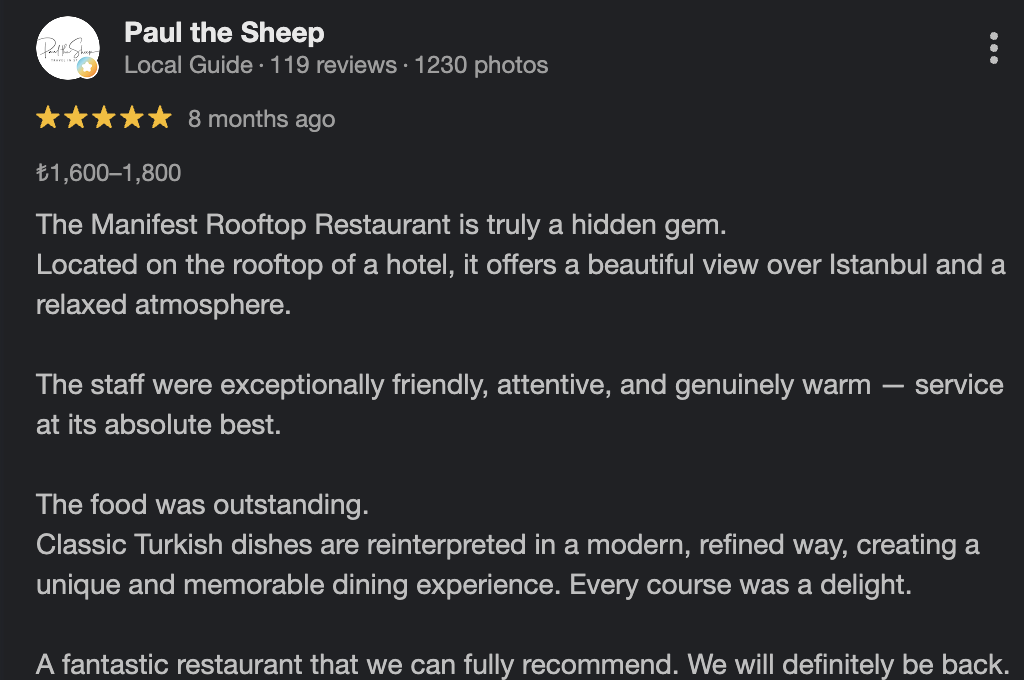
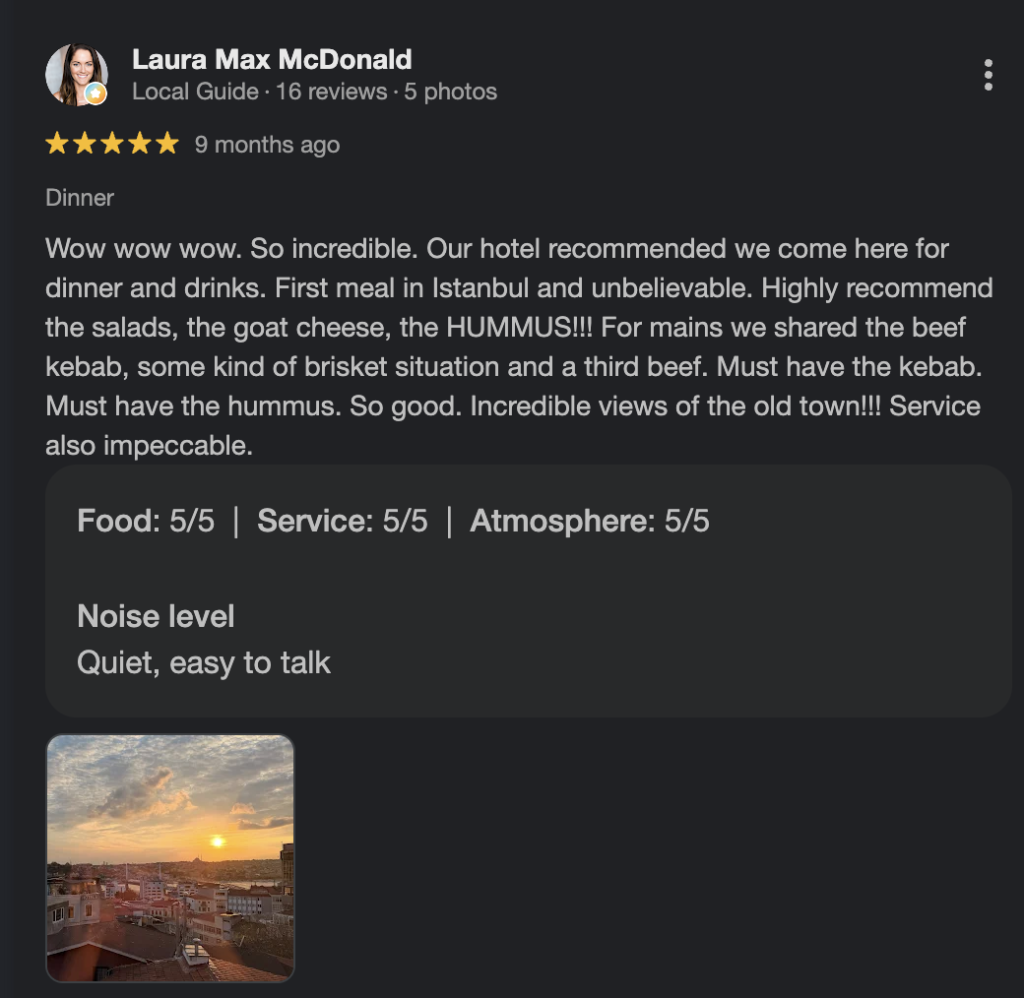
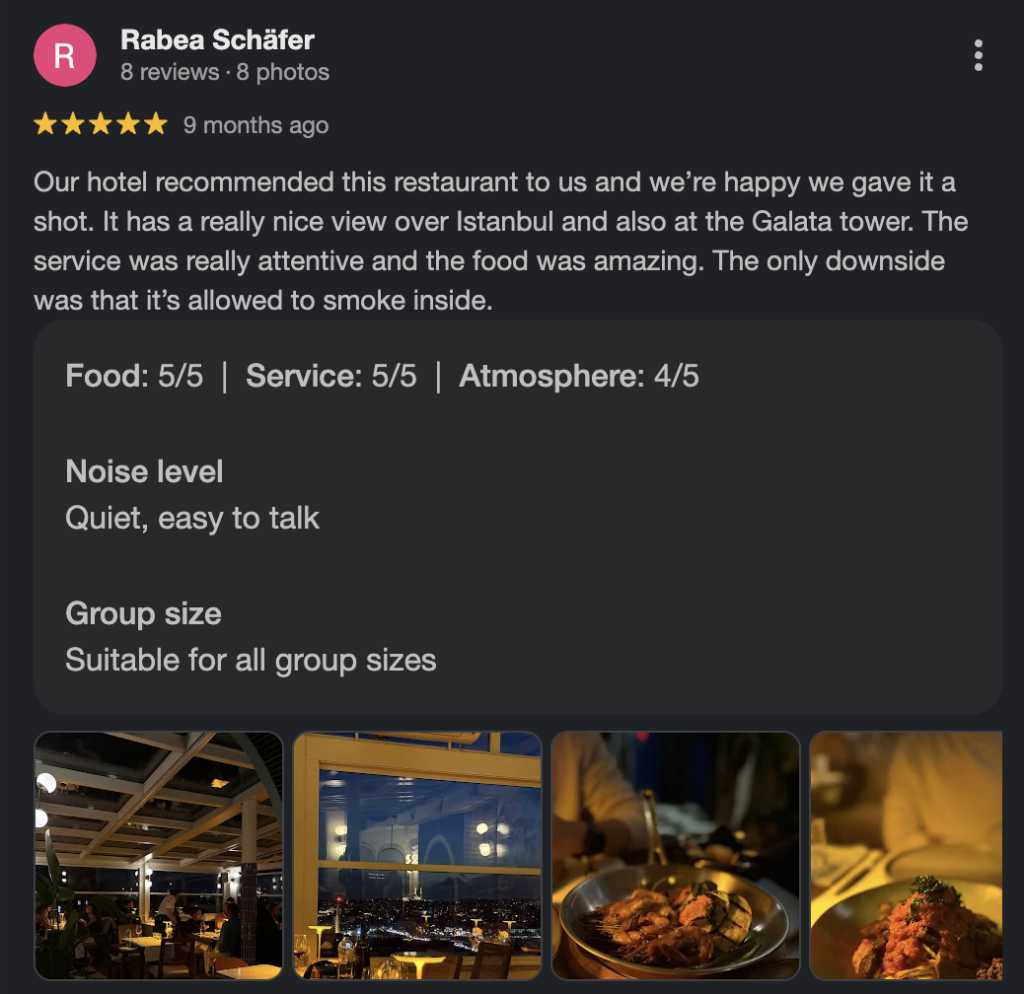
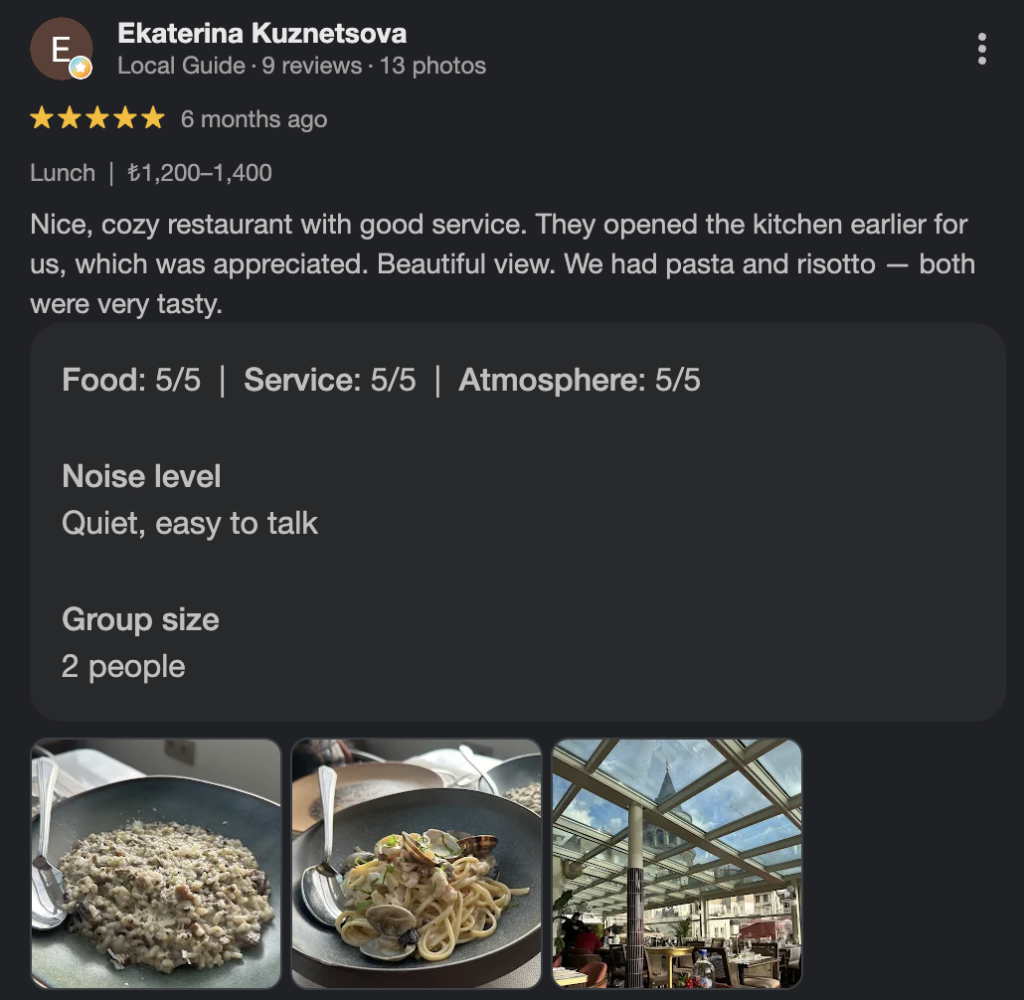
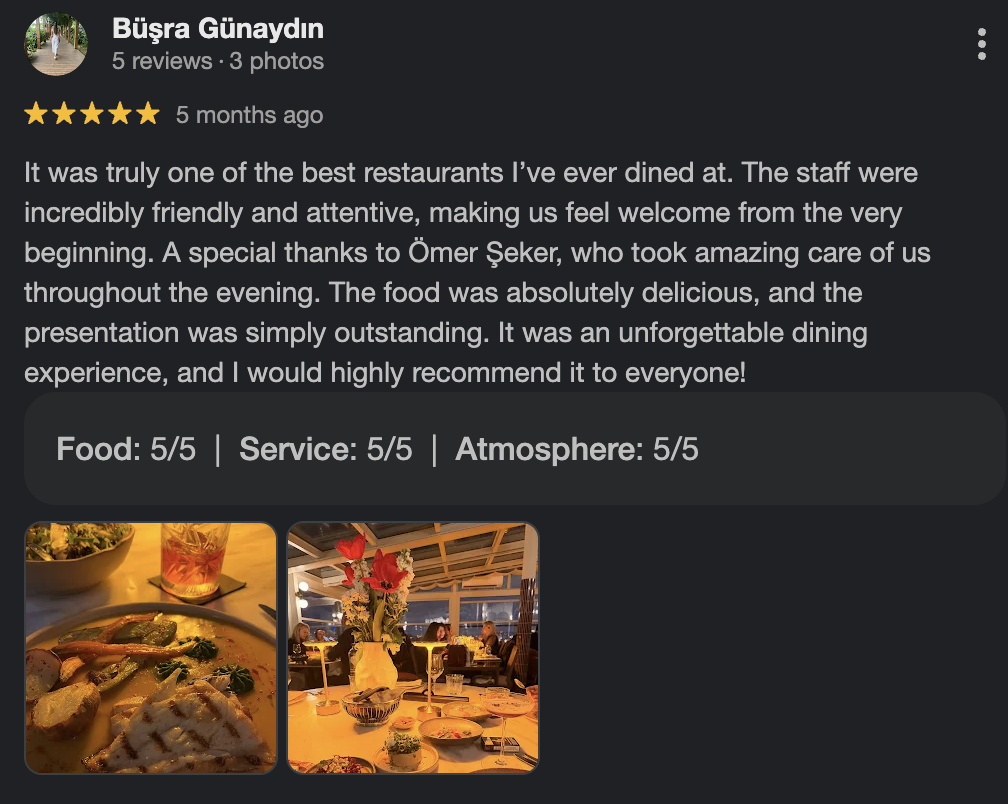
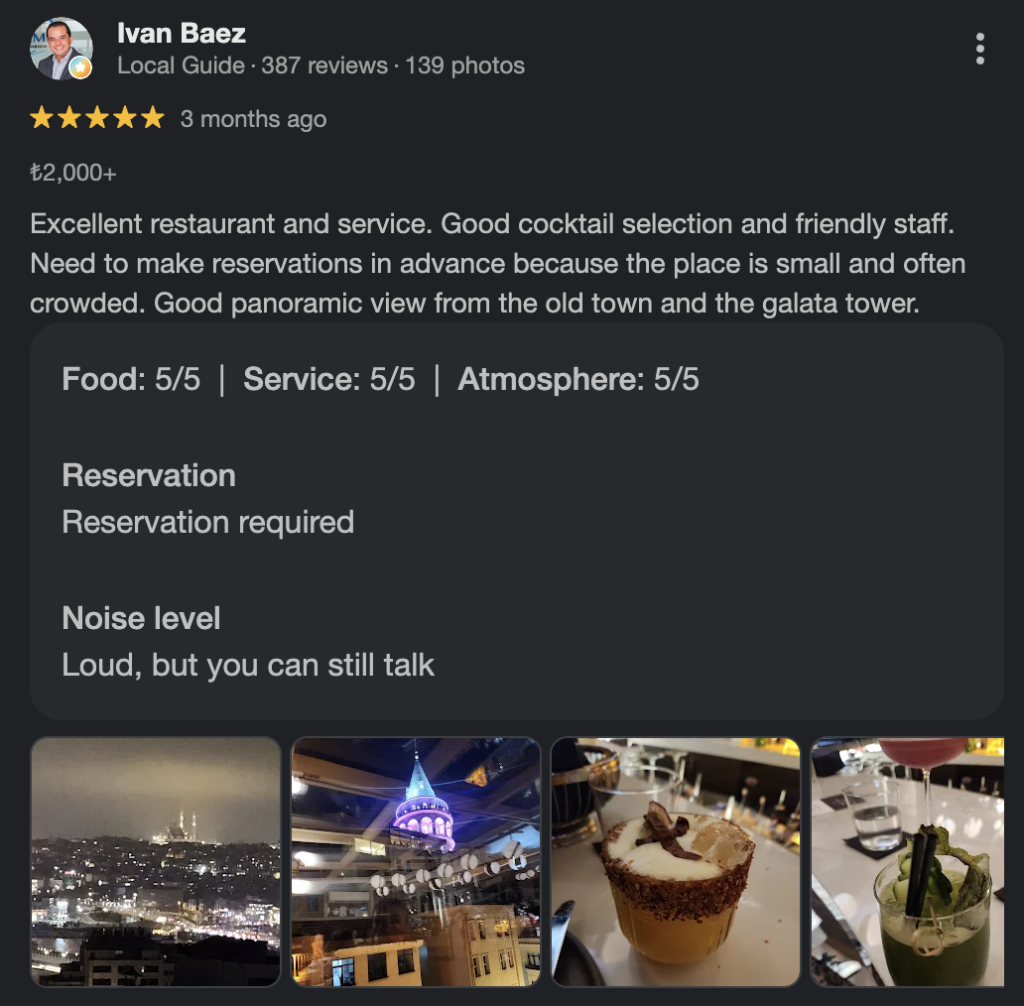
You can check out our business profile to read all the reviews.